Massachusetts winters are demanding—not just for homeowners, but for the roofs that protect them. Snow accumulation, freezing temperatures, ice buildup, and powerful windstorms all place unique stress on asphalt shingle roofing systems. Understanding how winter weather affects your roof helps homeowners plan proactively and avoid surprises during the coldest months of the year.
Massachusetts homeowners benefit most when winter roofing challenges are viewed as part of a larger seasonal strategy, which is why our Complete Homeowners Guide to Winter Roof Care guide fits into a broader framework for long-term roof health and planning.
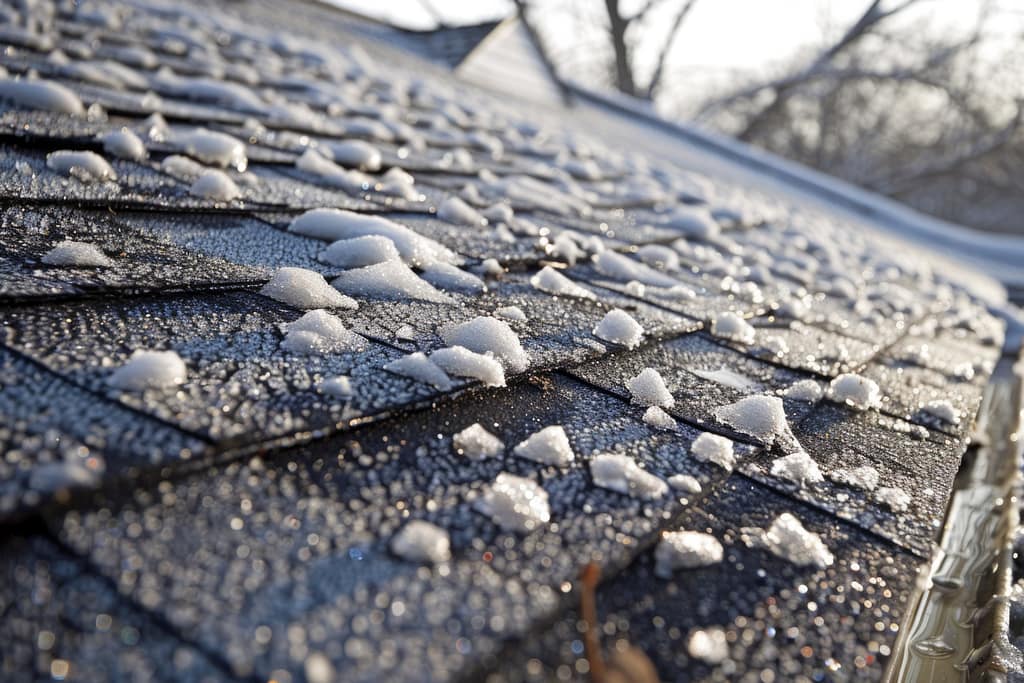
Freeze-Thaw Cycles and Shingle Expansion
One of the most challenging winter conditions for asphalt shingles is the freeze-thaw cycle. During the day, sunlight and milder temperatures can cause snow and ice to melt. At night, temperatures drop again, refreezing moisture that has settled on or beneath the shingles.
This constant expansion and contraction can:
- Loosen shingle seals
- Stress fasteners
- Gradually weaken shingle integrity
Over time, repeated freeze-thaw cycles accelerate natural aging—especially on roofs already nearing the later stages of their lifespan.
Snow Load and Structural Stress
Snow accumulation adds significant weight to your roof. While asphalt shingle systems are designed to handle snow loads, prolonged buildup can strain underlying components.
Heavier snow loads can:
- Increase pressure on roof decking
- Expose weaknesses in older systems
- Reveal ventilation or insulation deficiencies
Massachusetts homeowners experience wide variability in snowfall, which makes durability and system design especially important.
Ice Formation and Moisture Exposure
Ice is more than a visual concern—it’s a moisture risk. When snow melts and refreezes, ice can form along roof edges and valleys, where water naturally travels.
Extended moisture exposure:
- Breaks down protective granules
- Increases the risk of shingle brittleness
- Shortens long-term roof performance
Understanding how winter moisture behaves is critical for protecting asphalt shingles year after year.
Wind, Storms, and Winter Weather Events
Winter storms in New England often combine snow, ice, and strong winds. High winds place upward force on shingles, especially at roof edges and ridgelines.
When combined with cold temperatures that reduce shingle flexibility, wind-driven stress can:
- Accelerate wear
- Highlight installation or aging vulnerabilities
- Test overall system resilience
Why Winter Education Matters for Long-Term Roof Health
Winter doesn’t create roofing problems—it exposes them. Cold-weather conditions reveal how well a roof system was designed to handle stress over time.
For homeowners looking to understand how winter fits into overall roof performance and planning, our blog is part of a broader seasonal framework.
Planning Ahead for New England Winters
Asphalt shingle roofs in Massachusetts must endure repeated winters over decades. Education is the foundation of protection—knowing what your roof faces allows you to think long-term rather than react season by season.
Dave Miner Roofing designs asphalt shingle systems specifically for New England conditions, helping homeowners move through winter with confidence and clarity.
Contact us today for your free On-The-Spot Quote!